


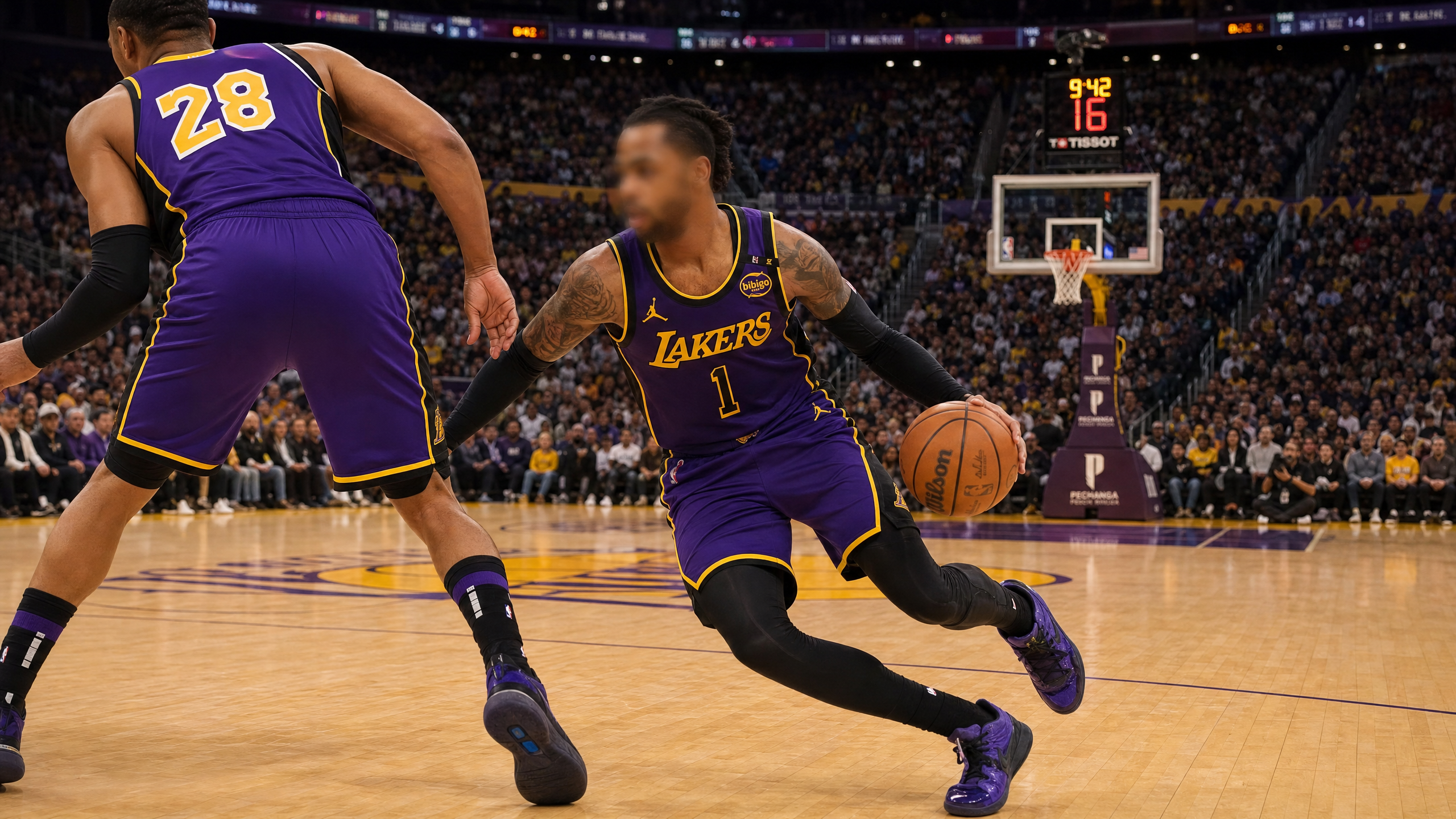
The dust has finally settled on the 2025-26 NBA season, leaving the Los Angeles Lakers at a fascinating and critical crossroads. After a regular season that showcased breathtaking highs—including a spectacular 15-4 start and a blistering 15-2 run in March—the franchise was ultimately forced to swallow a bitter pill. Hamstring and calf injuries to superstar Luka Doncic and guard Austin Reaves left a shorthanded roster vulnerable, culminating in a swift, four-game second-round sweep at the hands of the young, athletic Oklahoma City Thunder.
Yet, in Los Angeles, the news cycle never sleeps, and the conclusion of the postseason only marks the beginning of what promises to be one of the most defining offseasons in recent franchise history. With the NBA Draft rapidly approaching on June 23-24, 2026, and free agency set to open on June 30, General Manager Rob Pelinka and Head Coach JJ Redick find themselves tasked with answering monumental questions about the team’s identity, its financial flexibility, and its competitive timeline.
At the heart of this summer’s drama is a fundamental shift in organizational philosophy. For years, the Lakers have operated under the towering shadow of LeBron James. But as the legendary forward enters unrestricted free agency at 41 years old, a new reality has emerged in Southern California. The Los Angeles Lakers are now indisputably Luka Doncic’s team, and every decision made over the coming months will be viewed through the lens of maximizing the prime of their 27-year-old Slovenian centerpiece.
The Luka Doncic Reality: A Championship Timeline Redefined
Luka Doncic’s first full season in the purple and gold was nothing short of spectacular. The superstar playmaker captured the imagination of the Hollywood faithful, leading the league in scoring at a blistering 33.5 points per game, while adding 7.7 rebounds and 8.3 assists. More importantly, Doncic demonstrated a growing maturity in his game, showing gradual improvements in his shooting efficiency by knocking down a career-high 4.0 three-pointers per game at a 36.6% clip.
When Doncic was healthy, the Los Angeles Lakers looked like legitimate championship contenders. His synergy with Austin Reaves in the backcourt gave Los Angeles one of the most dynamic and creative offensive engines in the entire NBA. Under the guidance of JJ Redick, who proved in his second season behind the bench that his tactical acumen and modern offensive systems are a perfect fit for today’s game, the Lakers played with an offensive flow and passion that had been missing in previous years. Redick’s knack for drawing up creative after-timeout plays and his ability to maximize the roster’s limited depth kept the Lakers in the hunt for the top seed in the Western Conference for much of the winter.
However, the late-season hamstring injury that sidelined Doncic during the playoffs served as a stark reminder of the roster’s fragility. While LeBron James put together a vintage, heroic performance in the first round to dispatch the Houston Rockets, the second-round sweep by Oklahoma City exposed a lack of elite wing depth, perimeter defense, and frontcourt athleticism. To build a sustainable contender around Doncic, the Lakers’ front office must prioritize surrounding him with defensive-minded, high-energy role players who can thrive in the half-court while easing the defensive burden on their superstar point-forward.
The LeBron James Dilemma: Legacy, Leverage, and the Free Agency Waiting Game
As the Lakers look to the future, they must first resolve the status of the NBA’s all-time leading scorer. LeBron James is coming off his 23rd NBA season, an unprecedented milestone where he continued to defy Father Time by averaging 20.9 points, 6.1 rebounds, and 7.2 assists per game on an efficient 51.5% shooting from the field. Despite his individual brilliance, James spent much of the season adjusting to a new reality, operating as the team’s third offensive option behind the high-usage duo of Doncic and Reaves.
Now an unrestricted free agent, James faces three distinct paths: retirement, a return to Los Angeles, or a departure to join another championship contender. On his popular podcast, Mind The Game with Steve Nash, James recently outlined his timeline, indicating that he is prioritizing family vacations before seriously weighing his basketball future in late June and July. He made one thing abundantly clear: he has no interest in “starting over” with a rebuilding franchise. If he plays his 24th season, it will only be for a team capable of winning a championship.
While sportsbooks and prediction markets still favor James returning to the Lakers on a short-term deal—DraftKings has the Lakers as odds-on favorites at -150—the financial dynamics have grown incredibly complex. James is reportedly unwilling to accept a veteran’s minimum contract, believing his high-level production still warrants significant compensation. However, the Lakers’ front office is under immense pressure to maintain financial flexibility. If James returns, his camp is demanding transparency regarding how the front office plans to upgrade the roster. The legendary forward wants assurances that any financial sacrifice he makes will directly translate into championship-caliber reinforcements, rather than simply saving the organization money under the league’s restrictive collective bargaining agreement.
Prioritizing Austin Reaves: Why the Front Office is Looking Long-Term
While the national media remains hyper-focused on LeBron James’ next move, team insiders have revealed a fascinating shift in the Lakers’ internal hierarchy. According to reports from prominent NBA insider Jovan Buha, the Lakers are prepared to prioritize securing Austin Reaves to a lucrative, long-term contract over meeting LeBron’s short-term financial demands.
This decision represents a pragmatic, forward-thinking approach by Rob Pelinka. Reaves, who has blossomed into a borderline All-Star and an incredibly popular figure in Los Angeles, is seen as the perfect long-term partner for Luka Doncic. At 28 years old, Reaves’ developmental timeline aligns seamlessly with Doncic’s prime. He is expected to command a contract in free agency that could exceed $40 million annually—a steep price tag, but one the Lakers view as a necessary investment to secure their backcourt of the future.
As Buha explained, the Lakers view James as a short-term luxury, whereas Reaves is a long-term cornerstone. Furthermore, James has limited leverage in the open market; almost every legitimate championship contender outside of Los Angeles lacks the salary cap space to offer him more than a taxpayer mid-level exception or a veteran’s minimum. Reaves, on the other hand, will have a robust market of suitors with significant cap space who could force the Lakers’ hand. By prioritizing Reaves, the Lakers are ensuring that Doncic’s co-star remains locked in for the foreseeable future, even if it means taking a tougher stance in negotiations with James.
Rebuilding the Supporting Cast: Draft Assets and the Hunt for Defensive Wings
Beyond their stars, the Lakers must aggressively address the glaring holes in their supporting cast. The Deandre Ayton experiment, while showing occasional flashes of success under Redick’s coaching, ultimately failed to provide the consistent defensive anchoring and physical presence required to compete with the elite big men of the Western Conference. With Ayton likely on the move and the bench unit proving to be incredibly thin, the Lakers are searching for size, athleticism, and perimeter defense.
The first opportunity to upgrade the roster will come on draft night. The Lakers currently hold the No. 25 overall pick in the 2026 NBA Draft, and draft analysts suggest the team is actively scouting defensive-minded wing prospects and hybrid centers. However, there is a strong belief around the league that Los Angeles will look to package the 25th pick in a “win-now” trade to acquire established talent.
One name that has consistently emerged in trade rumors is New Orleans Pelicans forward Herbert Jones. The 27-year-old defensive maestro is entering the final year of his current contract before a three-year, $67 million extension kicks in, providing long-term cost certainty. League sources indicate the Lakers are “zeroing in” on Jones, with proposed trade packages centering around sophomore wing Dalton Knecht, forward Jarred Vanderbilt, and future draft capital, including the No. 25 pick and a 2031 first-rounder. Acquiring an elite, versatile defender like Jones, potentially alongside a young, athletic center like Yves Missi, would instantly transform the Lakers’ defensive identity and provide the perfect complementary pieces to insulate Doncic.
Looking Forward: A Pivotal Summer in Los Angeles
The Los Angeles Lakers are entering a summer of immense consequence. The era of relying solely on the individual brilliance of aging superstars is giving way to a more calculated, modern approach to roster construction. By centering their franchise around Luka Doncic, prioritizing the long-term retention of Austin Reaves, and aggressively hunting for elite defensive role players, the front office is laying the groundwork for a sustainable, championship-caliber future.
It will require discipline, tough negotiations, and perhaps some emotional departures. But for a franchise defined by its championship expectations, these hard choices are the only path back to the mountaintop. As the draft and free agency approach, the basketball world will be watching to see if Rob Pelinka can execute this ambitious vision and deliver the supporting cast that Luka Doncic needs to bring the Larry O’Brien Trophy back to Los Angeles.
Thank you for reading Lakers Daily! While the NBA offseason heats up, don’t forget to subscribe to our official YouTube channel for daily video updates, exclusive player interviews, and breaking trade rumors. Also, make sure to tune in to our hit show, LA Sparks Weekly, as we provide comprehensive, in-depth coverage of the Los Angeles Sparks’ exciting WNBA season. Stay connected with us for all things Southern California sports!
