


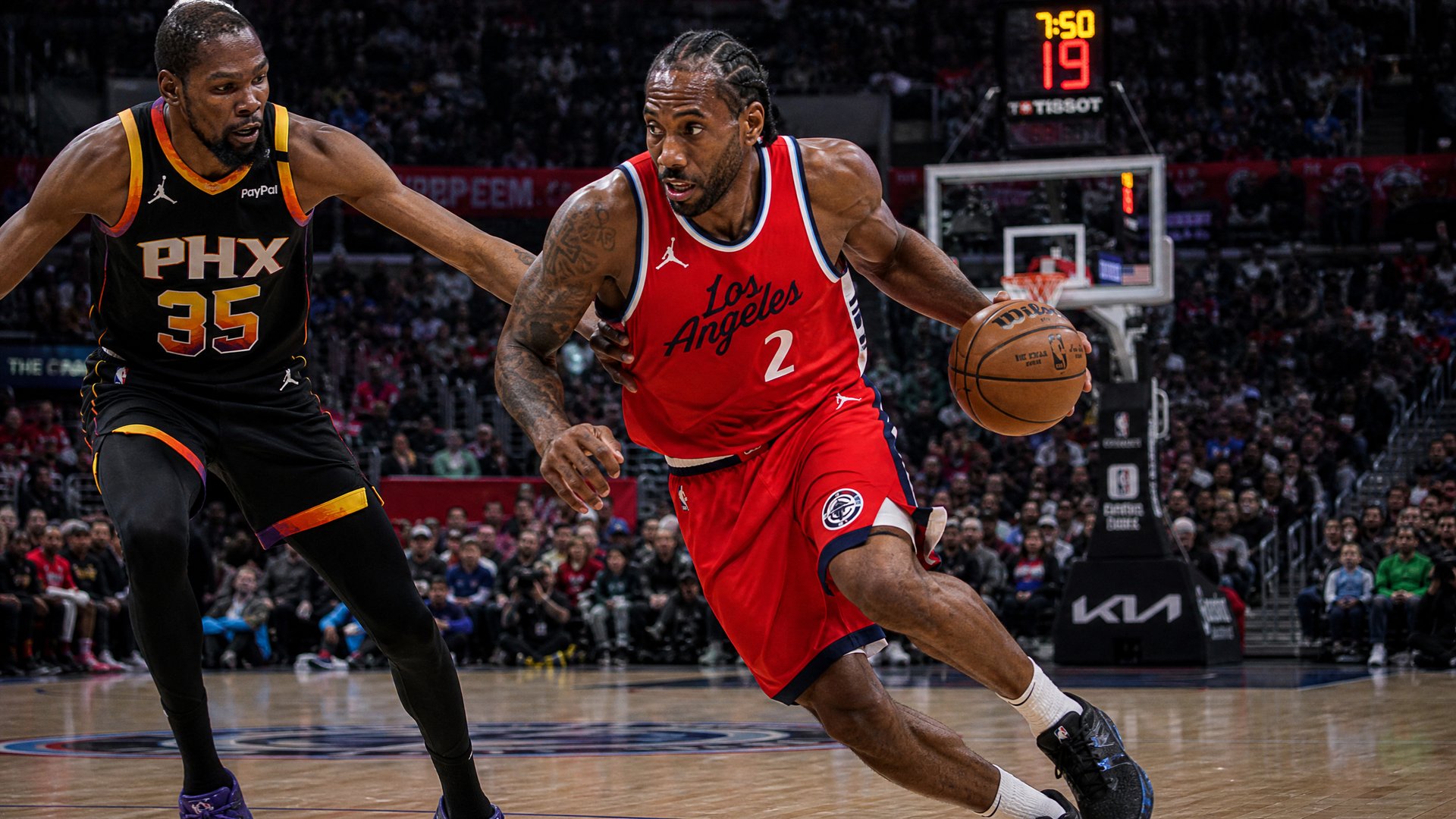
The tectonic plates of the NBA shifted violently on Tuesday night. After seven seasons defined by astronomical expectations, debilitating injuries, and ultimately, crushing playoff disappointments, the Los Angeles Clippers and Kawhi Leonard have officially parted ways. In a blockbuster deal that sends the two-time NBA Finals MVP back to the Toronto Raptors—the very franchise he led to a championship in 2019—the Clippers are hitting the reset button, signaling the end of an era and the dawn of a massive rebuilding effort.
For Clippers fans, the news is a complex cocktail of relief, frustration, and undeniable melancholy. The “213 Era,” born with the monumental acquisitions of Leonard and Paul George in the summer of 2019, was supposed to yield multiple championships and firmly establish the Clippers as the premier basketball franchise in Los Angeles. Instead, it yielded zero NBA Finals appearances, a single trip to the Western Conference Finals in 2021, and a staggering number of missed games from its star players.
Now, as the dust settles on the trade that sends Leonard north of the border, the Clippers must look to the future. The return package from Toronto—Brandon Ingram, Gradey Dick, two unprotected first-round picks (2031, 2033), two second-round picks (2030, 2033), and a 2027 first-round pick swap—provides a solid foundation for President of Basketball Operations Lawrence Frank to begin the reconstruction process. But the question remains: Are the Clippers finally ready to build a sustainable future, or is this just another false dawn in a franchise history littered with them?
The End of the “What If” Era
To understand the magnitude of the Leonard trade, one must first acknowledge the profound disappointment of his tenure in Los Angeles. When Leonard arrived in 2019, fresh off a historic championship run with the Raptors, he was widely considered the best two-way player in the world. He was the silent assassin, the ultimate closer, the missing piece that would finally deliver a championship to Steve Ballmer’s ambitious franchise.
But the reality rarely matched the hype. Leonard played at least 65 games just twice in his seven seasons with the Clippers. He missed the entire 2021-22 season due to a torn ACL, a devastating injury that derailed the team’s most promising playoff run. Even when he was on the court, the shadow of load management and the constant fear of re-injury hung over the franchise like a dark cloud.
The frustration peaked during the 2020 NBA Bubble, when the Clippers blew a 3-1 lead to the Denver Nuggets in the Western Conference Semifinals. It was a catastrophic collapse that exposed the team’s lack of chemistry and mental toughness. And while they managed to reach the Conference Finals the following year, Leonard’s ACL tear in the second round against the Utah Jazz effectively ended their championship window.
As the years dragged on, the narrative surrounding the Clippers shifted from “championship favorites” to “the biggest ‘what if’ in NBA history.” The team’s failure to capitalize on the prime years of Leonard and Paul George will forever be remembered as one of the most glaring missed opportunities in modern sports.
A Massive Haul from Toronto
While the departure of a franchise icon is always painful, the Clippers managed to extract a significant haul from the Raptors in exchange for Leonard. The centerpiece of the deal is undoubtedly Brandon Ingram, a 28-year-old former All-Star who brings elite scoring ability and playmaking potential to Los Angeles.
Ingram, originally drafted by the Lakers with the No. 2 overall pick in 2016, is no stranger to the bright lights of Staples Center (now Crypto.com Arena). He has blossomed into a dynamic offensive weapon during his time with the New Orleans Pelicans, averaging over 20 points per game in each of the last five seasons. His ability to create his own shot and initiate the offense will be crucial for a Clippers team that desperately needs a reliable primary scorer.
Alongside Ingram, the Clippers also acquired Gradey Dick, a promising young sharpshooter who struggled to find his footing during his rookie season in Toronto. Dick’s elite three-point shooting ability makes him an intriguing developmental prospect for a team that will be looking to surround its new core with floor spacers.
But perhaps the most valuable assets in the trade are the future draft picks. The two unprotected first-round picks in 2031 and 2033, along with the 2027 pick swap, provide the Clippers with the necessary ammunition to either draft foundational pieces or package them in future trades for established stars. In a league where draft capital is king, the Clippers have significantly replenished their war chest.
The New Core: Garland, Ingram, and Wagler
With Leonard officially gone, the Clippers’ focus shifts entirely to the future. The team’s new core will be built around a trio of intriguing talents: Darius Garland, Brandon Ingram, and rookie Keaton Wagler.
Garland, acquired from the Cleveland Cavaliers in a mid-season trade for James Harden, is a dynamic point guard who brings elite playmaking and shooting ability to the table. The 26-year-old former All-Star will be tasked with running the offense and maximizing the potential of his new teammates. His ability to navigate pick-and-rolls and create open looks for others will be essential for the Clippers’ success.
Ingram, as previously mentioned, will step into the role of primary scorer. His length, athleticism, and versatile offensive game make him a difficult matchup for opposing defenses. If he can stay healthy and continue to refine his playmaking skills, Ingram has the potential to blossom into a true superstar in Los Angeles.
The wildcard in the Clippers’ new core is Keaton Wagler, the 19-year-old guard from Illinois whom the team selected with the No. 5 overall pick in the 2026 NBA Draft. Wagler is a polished combo guard with a mature game that belies his age. He possesses excellent court vision, a reliable jump shot, and the ability to finish through contact at the rim. While it may take him some time to adjust to the speed and physicality of the NBA, Wagler has the potential to become a cornerstone piece for the franchise.
The Supporting Cast and Free Agency
Surrounding the new core is a mix of intriguing young talent and established veterans. Derrick Jones Jr., an elite athlete and versatile defender, will likely slot into the starting lineup alongside Ingram. Brook Lopez, whose team option was recently picked up, provides rim protection and floor spacing from the center position.
The Clippers also have high hopes for Bennedict Mathurin, whom they extended a qualifying offer to earlier this week. The explosive guard averaged 17.6 points per game last season and could thrive in a sixth-man role, providing instant offense off the bench.
As free agency officially opens, the Clippers will have several options to flesh out their roster. Re-signing forward John Collins, who averaged 13.6 points and 5.3 rebounds last season, should be a priority. The team could also explore the market for veteran presence, with names like DeMar DeRozan and Mitchell Robinson potentially on their radar.
The Road Ahead: Patience is Key
The transition from a championship contender to a rebuilding team is never easy. There will undoubtedly be growing pains, frustrating losses, and moments of doubt as the Clippers attempt to forge a new identity. But for the first time in a long time, there is a clear direction and a sense of optimism surrounding the franchise.
The “213 Era” is officially over, and with it, the suffocating pressure of championship expectations. The Clippers are now playing with house money, armed with a talented young core, a war chest of draft picks, and a front office that has proven capable of executing complex trades and navigating the treacherous waters of the NBA landscape.
For fans, the key to surviving this transition period will be patience. Rome wasn’t built in a day, and neither is a championship-contending basketball team. The Clippers have laid the foundation for a sustainable future, but it will take time for the pieces to come together and for the young talent to reach its full potential.
As the 2026-27 season approaches, the Clippers are entering a new chapter in their history. The ghosts of the past have been exorcised, and the focus is firmly on the future. The Kawhi Leonard era may have ended in disappointment, but the lessons learned and the assets acquired in his departure have positioned the Clippers for a brighter tomorrow. The rebuild is officially underway, and the entire NBA will be watching to see if the Clippers can finally get it right.
