


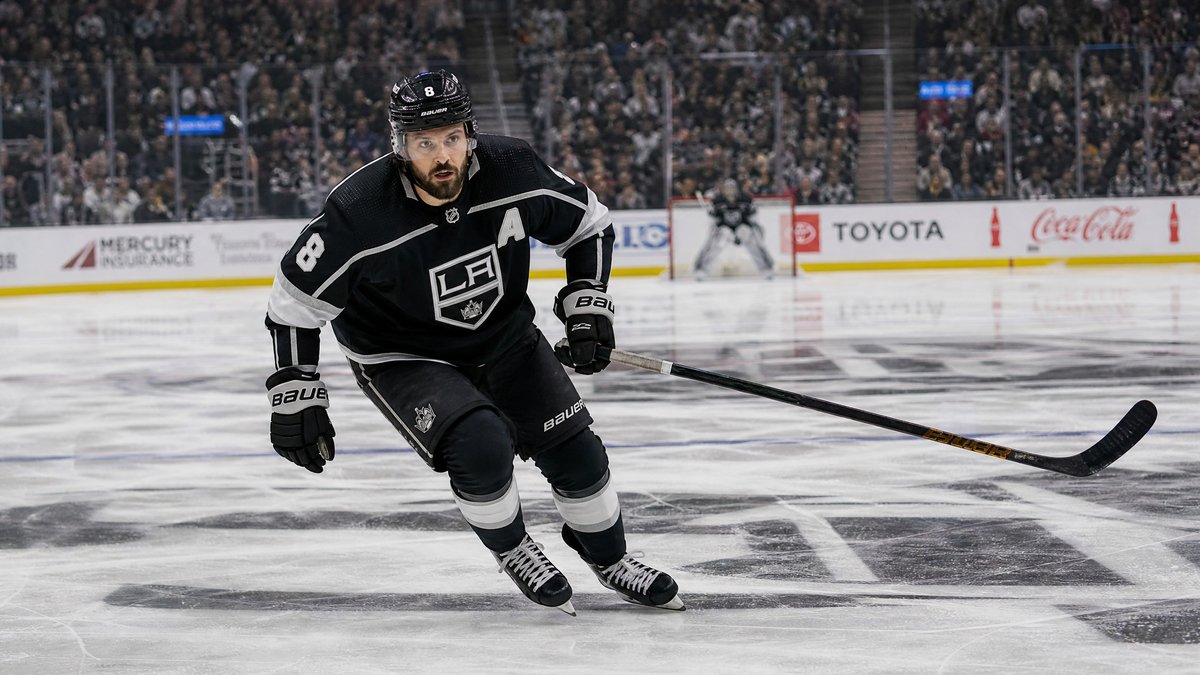
The Doughty Dilemma and the Next Captain: Inside the LA Kings’ Summer of Transition
The Los Angeles Kings are navigating one of the most pivotal offseasons in recent franchise history. Following a disappointing end to the 2025-26 campaign, General Manager Ken Holland and newly appointed Head Coach Peter Laviolette have been aggressively reshaping the roster. The July 1 free agency frenzy brought an influx of veteran talent—including Mats Zuccarello, Erik Haula, and Scott Laughton—designed to inject offense and two-way stability into a lineup that ranked 29th in scoring last season.
However, as the dust settles on the initial wave of signings and the 2026 Development Camp concludes in El Segundo, the focus has shifted from who the Kings have added to the internal dynamics of the players already in the locker room. Two massive storylines are currently dominating the conversation surrounding the team: the unresolved contract situation of franchise icon Drew Doughty, and the looming decision of who will wear the “C” as the next captain of the Los Angeles Kings.
These two issues are deeply intertwined, representing a delicate balancing act between honoring the past and transitioning to the future. How the Kings handle the Doughty dilemma and the captaincy will set the tone for the Laviolette era and define the culture of the team for years to come.
The Drew Doughty Contract Situation: A Waiting Game
Drew Doughty is synonymous with Los Angeles Kings hockey. A two-time Stanley Cup champion, a Norris Trophy winner, and a surefire Hall of Famer, Doughty has been the heartbeat of the Kings’ blue line since he entered the league in 2008. He is a fiercely proud competitor who has given everything to the organization.
Currently, Doughty is entering the final year of his massive eight-year, $88 million contract, which carries an $11 million average annual value (AAV). As a pending unrestricted free agent in the summer of 2027, the expectation in many corners of the hockey world was that the Kings would look to sign him to an extension this offseason, ensuring he finishes his career in Los Angeles.
Instead, the Kings have opted for a different approach. According to Elliotte Friedman on the 32 Thoughts podcast, the organization has informed Doughty that they will not engage in extension talks until after the upcoming 2026-27 season.
“Drew Doughty, that was a big deal that the Kings announced, that they’ll go into next year and see how it goes, and then sort it out after,” Friedman noted.
This decision is a calculated risk by Ken Holland. On one hand, it makes perfect business sense. Doughty will be 37 years old when his current contract expires. While he remains a highly effective defenseman, Father Time is undefeated. The Kings need to evaluate how Doughty performs in Laviolette’s new “attack mode” system and assess his physical durability over another grueling 82-game season before committing future cap space.
Furthermore, the Kings recently signed 23-year-old defenseman Brandt Clarke to a massive five-year, $37 million extension ($7.4M AAV). Clarke is the heir apparent on the right side of the defense, and his new contract signals that it is time for him to assume a larger role, potentially cutting into Doughty’s ice time and power-play deployment.
On the other hand, the human element cannot be ignored. Doughty is, as Friedman described him, a “proud guy.” Being told to wait for an extension could be interpreted as a slight by a player who has been the face of the franchise.
Ken Holland addressed this delicate dynamic during the NHL Draft, drawing on his experience managing aging Hall of Famers during his tenure with the Detroit Red Wings. Holland emphasized that while the respect for the player remains absolute, there must be a recognition that both salary and role will inevitably change as a player reaches the twilight of his career.
The challenge for Laviolette and the coaching staff will be managing Doughty’s expectations and ego. If Doughty embraces a slightly reduced role while mentoring Clarke, the transition could be seamless. If he bristles at the idea of taking a back seat, it could create friction in a locker room that is already undergoing significant changes.
The Search for the Next Captain
The departure of Anze Kopitar has left a massive void in the Kings’ leadership structure. Kopitar wore the “C” with quiet dignity and led by example for nearly a decade. Replacing him is not just about sewing a letter onto a jersey; it is about identifying the player who embodies the identity of the team moving forward.
The debate over the next captain is a frequent topic on sports radio and among the fanbase. During a recent Hot Stove segment on NHL Network Radio, analysts John Hoven, Dennis Bernstein, and Dave Pagnotta discussed the Kings’ options, highlighting the complexity of the decision.
There are essentially two paths the Kings can take: the veteran bridge or the youth movement.
The Veteran Bridge: Drew Doughty or Adrian Kempe
If the Kings want to maintain continuity and reward tenure, Drew Doughty is the obvious choice. He has been an alternate captain for years, he is the most vocal leader in the room, and he has the championship pedigree that commands instant respect. Giving Doughty the captaincy for his final season (or seasons, if extended) would be a fitting tribute to his legacy.
However, the uncertainty surrounding his contract complicates this option. Naming a captain who might not be on the roster a year from now is generally not a recipe for long-term stability.
Adrian Kempe presents another intriguing veteran option. At 29, Kempe is in the prime of his career and has established himself as the Kings’ most consistent offensive threat. He leads by example on the ice with his relentless work ethic and has grown into a more vocal presence in the locker room. Kempe is signed long-term and represents the bridge between the Cup-winning era and the current core.
The Youth Movement: Quinton Byfield
If the Kings want to make a bold statement about the future of the franchise, they could hand the captaincy to Quinton Byfield. At just 23 years old, Byfield is the cornerstone of the organization’s forward group. Following a breakout 2025-26 season, he is expected to take the mantle as the team’s number one center.
Naming Byfield captain would be a massive show of faith from the organization. It would signal a definitive turning of the page and empower the young core—including Byfield, Clarke, and Alex Turcotte—to take ownership of the team.
There is precedent for this approach in the NHL. Teams like the Colorado Avalanche (Gabriel Landeskog), Edmonton Oilers (Connor McDavid), and Vancouver Canucks (Quinn Hughes) all named young franchise cornerstones as captains early in their careers, allowing them to grow into the role.
The risk, of course, is placing too much pressure on a young player who is still developing his game. Byfield will already face immense scrutiny as he attempts to replace Kopitar’s production; adding the weight of the captaincy might be an unnecessary burden at this stage of his career.
The Laviolette Factor
Ultimately, the decision on the captaincy will heavily involve Peter Laviolette. As a new coach coming into an established locker room, Laviolette needs a captain who can serve as a conduit between the coaching staff and the players. He needs someone who buys into his aggressive, up-tempo system and can hold the rest of the team accountable.
Laviolette has a history of leaning on strong veteran leadership. During his time in Washington, he relied on Alex Ovechkin; in Nashville, it was Roman Josi and Shea Weber. This might suggest a preference for a player like Doughty or Kempe, at least in the short term.
However, Laviolette is also tasked with modernizing the Kings’ style of play. If he views Byfield as the ultimate embodiment of the speed and skill he wants his team to play with, he might advocate for the young center to lead the charge.
A Summer of Evaluation
As the summer progresses, the Kings will continue to evaluate their options. The front office is still exploring the trade market, looking to alleviate a logjam at forward and potentially upgrade the defense. The development camp provided a glimpse of the future, with recent draft picks like Elton Hermansson and Liam Lefebvre making strong impressions.
But the true identity of the 2026-27 Los Angeles Kings will be forged in how they handle the internal transitions. The Drew Doughty contract situation requires delicate diplomacy, balancing respect for a legend with the pragmatic realities of the salary cap. The selection of the next captain requires vision, identifying the player who can unite a changing locker room and lead the team back to Stanley Cup contention.
Ken Holland and Peter Laviolette have their work cut out for them. The decisions they make in the coming months will resonate far beyond opening night.
Be sure to check out our YouTube channel and our show ‘LA Sparks Weekly’ for more Los Angeles sports coverage and analysis!
