


The LA Kings’ 2026 Draft Haul and the Brandt Clarke Extension: Building for the Future
The Los Angeles Kings have officially wrapped up their business at the 2026 NHL Entry Draft in Buffalo, New York, and the results speak volumes about the franchise’s direction under General Manager Ken Holland and Director of Amateur Scouting Mark Yannetti. With 11 total selections across the two-day event, the Kings restocked their prospect pool with a diverse mix of high-upside forwards, steady defensemen, and a promising goaltender. But the draft wasn’t the only major news coming out of El Segundo this week. In a massive move that solidifies their blue line for the foreseeable future, the Kings signed breakout defenseman Brandt Clarke to a lucrative five-year contract extension.
As the dust settles on a frantic week of hockey operations, it is clear that the Kings are aggressively positioning themselves to return to Stanley Cup contention. From the strategic maneuvering on the draft floor to the commitment shown to their young core, the blueprint for the next half-decade of Kings hockey is rapidly taking shape.
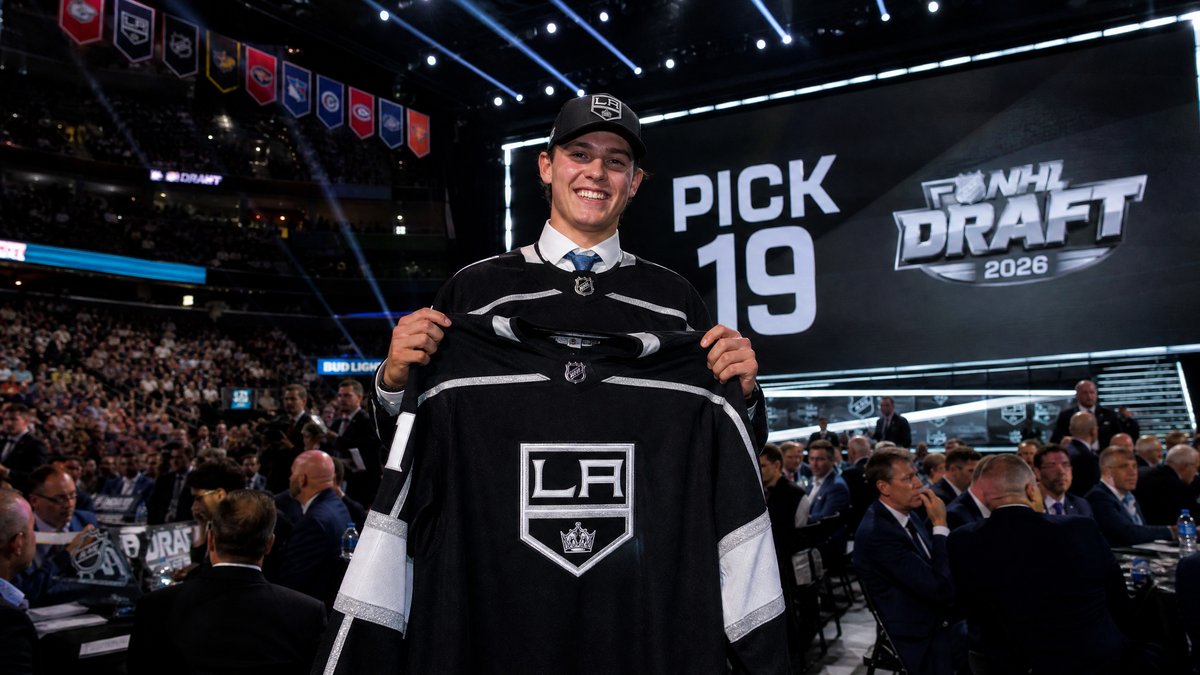
The 19th Overall Pick: Elton Hermansson Fits the Bill
The centerpiece of the Kings’ 2026 draft class is undoubtedly Swedish forward Elton Hermansson, selected 19th overall in the first round. The Kings originally held the 17th overall pick but executed a savvy trade with the Utah Mammoth, moving back two spots to 19 while acquiring an additional third-round pick (83rd overall). According to Mark Yannetti, the Kings were confident that their targeted player would still be available at 19, making the trade a calculated risk that paid off handsomely.
Hermansson, an 18-year-old winger from MoDo Hockey in the Swedish HockeyAllsvenskan, brings a dynamic offensive toolkit that the Kings desperately need. In a league playing against grown men, Hermansson tallied 11 goals and 21 points in just 38 games. He was the second-youngest player on the MoDo roster but still managed to finish fourth on the team in goal scoring. His ability to translate his production from the junior ranks to a professional men’s league is a testament to his maturity and adaptability.
What makes Hermansson so intriguing is his evolution as a player. Early in his tenure with MoDo, he realized that relying solely on perimeter play wouldn’t cut it against bigger, stronger opponents. He adjusted his game, becoming more physical and showing a willingness to drive hard to the net. This maturation process transformed him into a more complete playmaker and a dangerous scoring threat.
The Kings ranked 29th in the NHL in goals per game last season (2.68), making offensive firepower a top priority. Hermansson fits that bill perfectly. He possesses elite puck skills, a high hockey IQ, and the kind of top-end talent that is rare to find outside the top 10 picks. While he will likely need more development time in Sweden and potentially with the AHL’s Ontario Reign, Hermansson represents a critical piece of the Kings’ future offensive core. The MoDo Hockey connection also brings back fond memories for Kings fans, as the organization previously drafted a young Swedish forward from MoDo in 2014—Adrian Kempe. If Hermansson can follow a similar trajectory, the Kings will have found a massive steal at 19.
Day 2 Draft Haul: Depth, Versatility, and Overaged Gems
While Hermansson grabbed the headlines on Day 1, the Kings were incredibly busy on Day 2, making 10 additional selections to round out their 11-player draft class. The strategy was clear: target players with high hockey sense, competitive drive, and specific skill sets that fill organizational needs.
In the second round, the Kings selected forward Liam Lefebvre (46th overall) and defenseman Adam Goljer (49th overall). Lefebvre is a fascinating story. As an overaged player, he was passed over in his initial draft year due to an injury that hampered his performance. However, after moving from the New England Prep School circuit to the QMJHL, Lefebvre exploded offensively, scoring 32 goals and showcasing a rock-solid, two-way game. Yannetti praised Lefebvre’s intangibles, noting his reputation as a dedicated, big-game player who elevated his performance during the QMJHL playoffs and the Memorial Cup. At 6-foot-3, Lefebvre brings size, goal-scoring touch, and versatility, capable of playing both center and wing.
The Kings continued to build depth in the later rounds, selecting forward Blake Zielinski (80th overall) and goaltender Yegor Rybkin (89th overall) in the third round. In the fourth round, they added forward Thomas Vandenberg (103rd overall).
One of the more interesting aspects of the Kings’ draft strategy was their approach to the fifth round, where they selected two defensemen with completely contrasting styles: Vertti Svensk (145th overall) and Giorgos Pantelas (153rd overall). Svensk is described as a slick, elite skater and puck-moving defenseman, while Pantelas is a bigger, physical, stay-at-home blueliner. Yannetti noted that getting two different types of defensemen in the same tier of the draft provides excellent versatility for the prospect pool.
The Kings rounded out their draft class with forward Alex Kostov (177th overall) in the sixth round, and forward Tobias Krestan (209th overall) and defenseman Lucas Ambrosio (223rd overall) in the seventh round. In total, the Kings drafted six forwards, four defensemen, and one goaltender, addressing needs across the board.
Locking Down the Blue Line: Brandt Clarke’s Five-Year Extension
While the scouting department was busy in Buffalo, the Kings’ front office secured a massive piece of their current and future roster by signing defenseman Brandt Clarke to a five-year contract extension. The deal carries an average annual value (AAV) of $7.4 million and will keep the 23-year-old blueliner in Los Angeles through the 2030-31 season.
Clarke’s extension is a well-deserved reward for a phenomenal 2025-26 campaign. Playing in all 82 games, Clarke set professional career highs across the board, including goals (8), assists (32), points (40), power-play points (13), and blocked shots (185). He led all Kings defensemen in scoring and tied for fourth in overall team points. Furthermore, his 185 blocked shots ranked third in the entire NHL among all skaters, proving that he is not just an offensive specialist but a committed two-way defender.
By reaching the 40-point mark, Clarke became just the ninth defenseman in Kings franchise history to achieve that milestone at 23 years of age or younger. The last player to do so was Drew Doughty during the 2010-11 season. That comparison alone highlights the magnitude of Clarke’s potential and his importance to the organization.
Selected eighth overall in the 2021 NHL Draft, Clarke has steadily developed into a cornerstone player. After dominating the OHL with the Barrie Colts—where he posted an absurd 61 points in 31 games during the 2022-23 season—and gaining valuable professional experience with the Ontario Reign, Clarke has firmly established himself as a top-pairing NHL defenseman.
The $7.4 million AAV represents a significant commitment from the Kings, but it is a calculated investment in a player whose prime years are still ahead of him. With the salary cap expected to rise in the coming seasons, locking up a dynamic, right-shot defenseman like Clarke for five years could quickly turn into a bargain contract. His ability to drive offense from the back end, quarterback the power play, and sacrifice his body in the defensive zone makes him an invaluable asset as the Kings transition into a more aggressive, attack-oriented system under new head coach Peter Laviolette.
Looking Ahead: Development Camp and the Offseason Grind
With the draft concluded and Clarke’s extension finalized, the Kings are wasting no time shifting their focus to player development. All 11 members of the 2026 draft class, including Elton Hermansson and Liam Lefebvre, are expected to attend the Kings’ annual Development Camp, which kicks off on June 29 at the Toyota Sports Performance Center in El Segundo.
The camp will feature a total of 40 attendees, including 22 forwards, 14 defensemen, and four goaltenders. It provides a crucial opportunity for the coaching staff and management to evaluate their new prospects up close, introduce them to the organization’s culture and expectations, and set the foundation for their professional development.
As the offseason progresses, the Kings still have work to do. The free agency period looms, and the front office must address the ongoing need for center depth and evaluate the goaltending situation. However, the events of the past week have provided a massive boost of optimism for the franchise. By adding high-end talent through the draft and securing their brightest young star on the blue line, the Los Angeles Kings have taken significant strides toward building a sustainable, championship-caliber roster. The foundation is set; now, the real work begins.
